
Marketing Automation helps an Insurance Company improve their Sales Force Productivity by 12X
How email automation helped one of India’s largest insurance companies improve their contact center productivity by 12X, and directly influence 30% of sales through digital mediums
Executive Summary
Insurance sales are typically driven by solicitation and require a high degree of persuasion, typically driven by agents, on the field and over calls. The client had created a digital selling experience to enable consumers to purchase policies on their own but they were experiencing a high amount of drop-offs. To counter this, the contact center of the brand followed up on 'prospects' persuading them to complete the application process and purchase.
This sales process was marred by various issues:

We proposed a marketing automation solution, to reduce dependency on the contact centre, personalize communication in a non-intrusive manner, enabling consumers to become educated about the products and features, and helping them to make the purchase at their own pace.
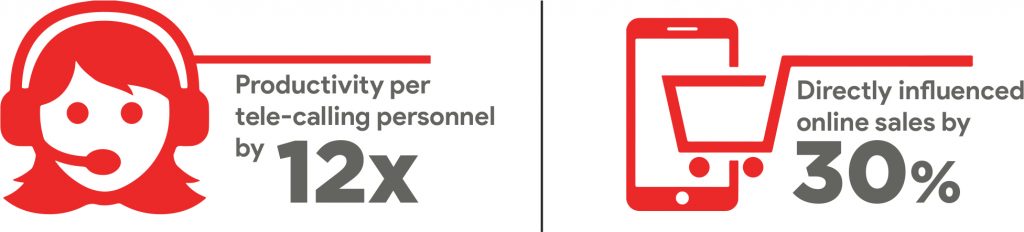
This resulted in a boost in ROI with 30% of their overall sales attributed to the automation efforts. Along with this, productivity per contact centre personnel improved by 12X.
The Brand
The brand is a joint venture between a US based Fortune 500 company and an Indian conglomerate. It is one of India's largest insurance companies, headquartered in Mumbai, with a pan India presence spread across 15 cities. The brand has extensively invested in state-of-the-art technology to give customers and distributors a completely hassle-free and personalized service experience.
Situation analysis and Challenge
The brand wanted to use technology to enable consumers to purchase policies based on their unique needs. By investing in a web-based purchase experience, the brand assumed that a significant amount of their revenues would be driven digitally.
However, a few factors were proving to be the bottlenecks.
- •Insurance is driven by regulation. In addition, a lot of detail is required as an input towards risk assessment. Both of these make the application forms lengthy, taking nearly 10 minutes to purchase the product. Result? A high percentage of drop-offs through the process.
- •Cost of bringing consumers back online or offline requires a massive intervention using phone calls and agent visits, making the cost of sales high (and unsustainable).
- •In a growing market, ability to scale is important. Without a doubt, digital should do that but the above constraints were interrupting the ROI. The frequency of pursuit of a lead and the swiftness with which the leads are called up are considered to be the Holy Grail of Sales. But the widespread use of such tactics leads to consumer fatigue, who simply wish to be left alone – to be able to research, assimilate and decide on their own without being pestered with unwanted calls.
Any approach should reduce the amount of human intervention needed as well as personalize communication, taking into account the consumer's context.
Approach
Our team worked with the client through the following steps:
- •Conducted a deep analysis of consumer behaviour online – what path do they follow on the website, how do they traverse through the purchase steps and what information are we collecting which could help define consumer segments.
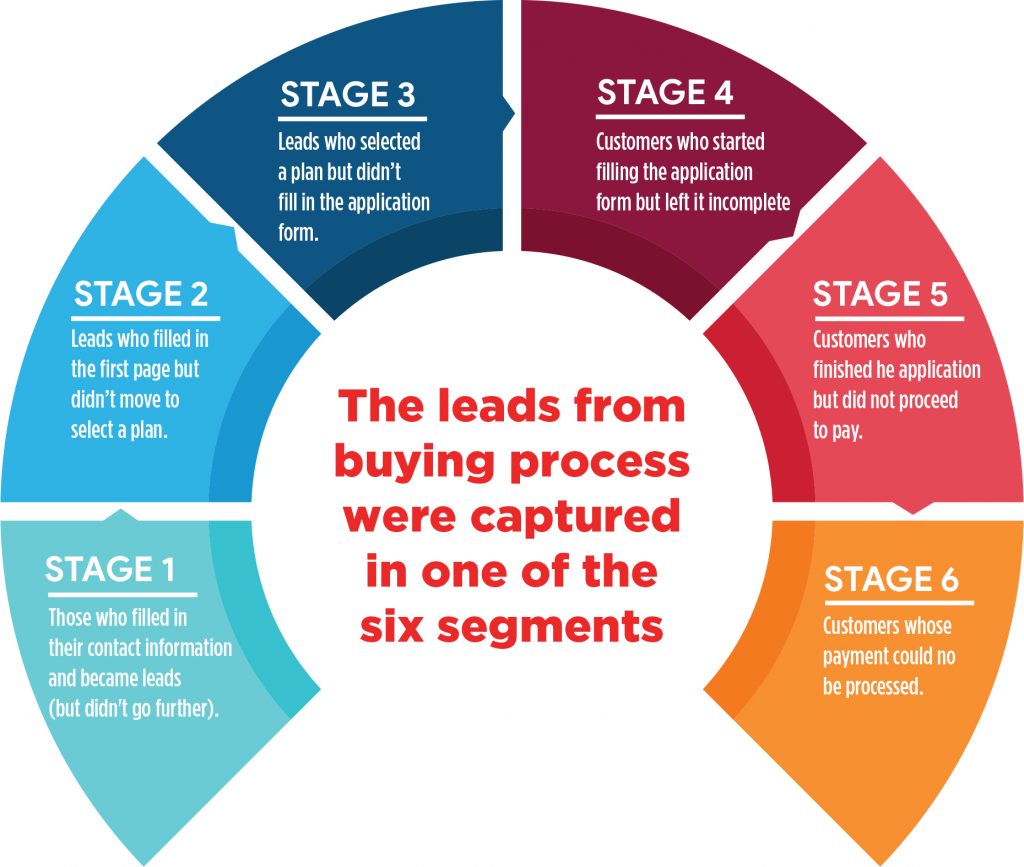
- •Identify consumer segments based on data inputs provided during various stages of the application.
- •Map products most suited to the consumer segments. Also, identify the content which would be of appeal to these distinct consumer segments.
- •Implement automation factoring the inputs from the preceding steps.

Automation platform
We weighed multiple automation platform choices. Realizing that the implementation would need heavy customization, we decided to use Mautic, an open source automation platform, which is both tremendously powerful and practically free to use.
Based on these segments (both purchase stage and demographics), workflows were built for sending emails at each stage based on their interactions on the website, the previous communication received and their demographic data. An illustration for a particular segment is shown here.
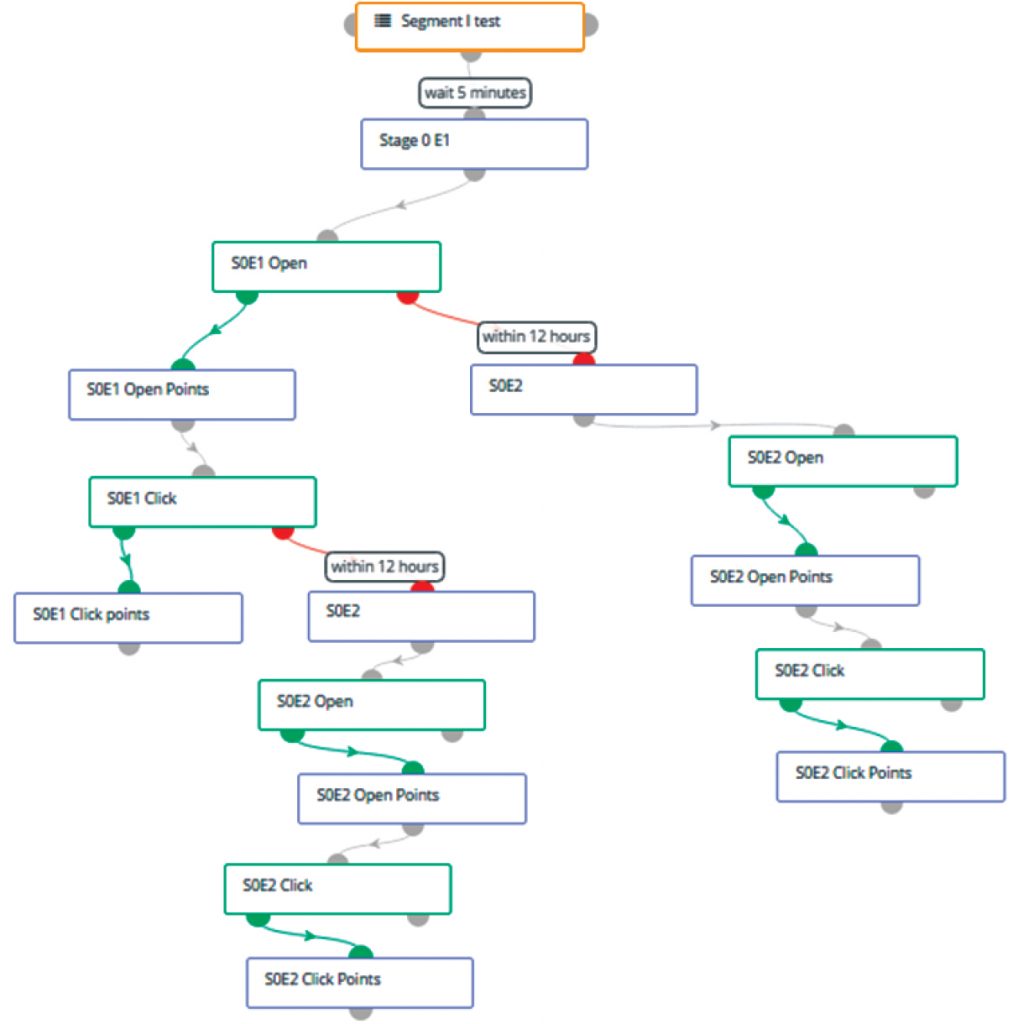
Care was taken to tag each email click link with UTM parameters to capture the click-throughs on Google Analytics. The client's sales team helped with inputs on logical delays between workflow elements, decision points etc.
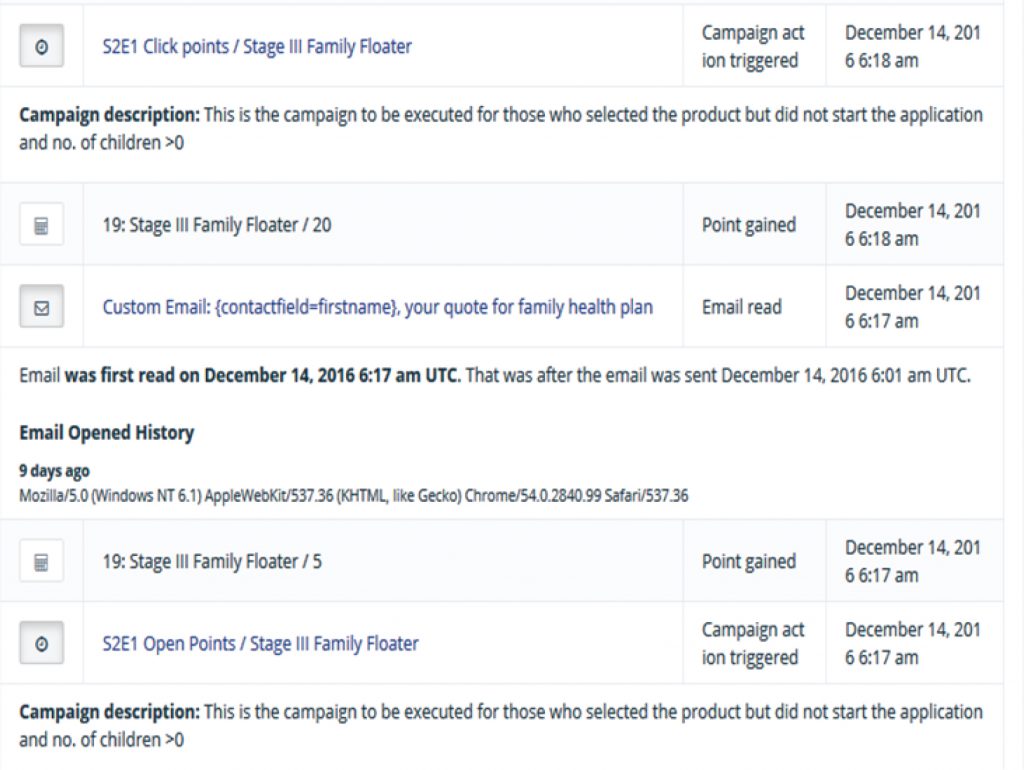
A point mechanism was implemented to help with lead-scoring, helping the sales force to prioritize and make calls selectively rather than to every prospect in the pipeline.
Systems were put in place to optimize for open and click rates for each segment and to determine the ideal number of interventions required to push a large number of consumers from Stage I to Stage V, i.e., the checkout stage.
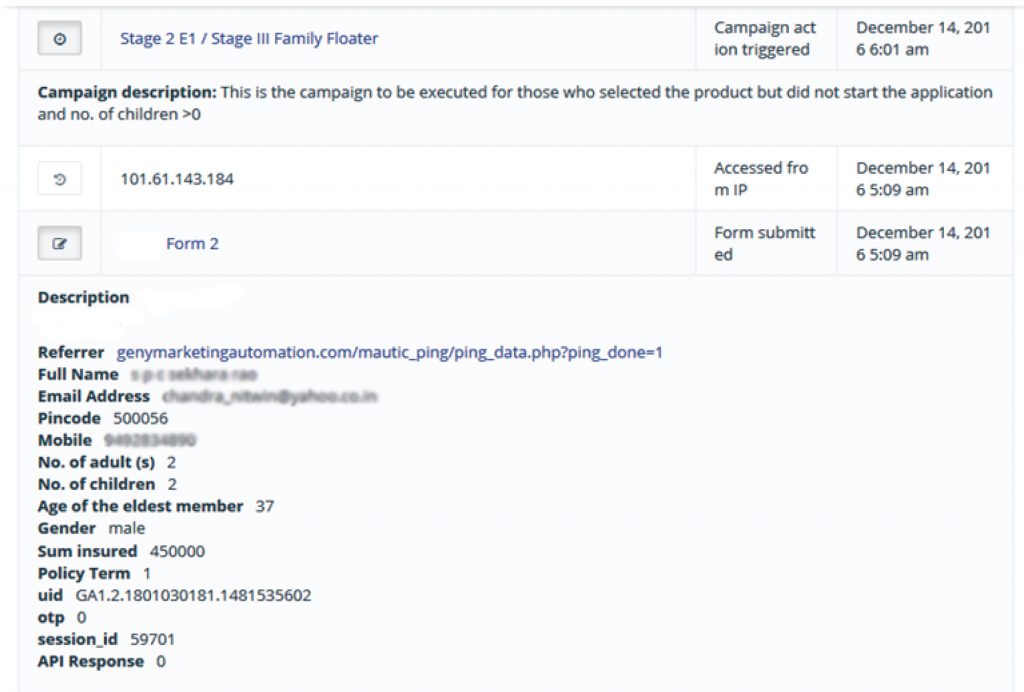
Contact Engagement history in Mautic
Outcome
The entire automation process helped in improving the following:
Other benefits brought about by this implementation of automation included:
- •Significant reduction in the cost of acquisition for each policy sold, driven by the reduction in human resource involved in pursuing leads over calls.
- •Non-intrusive and personalized communication, enhancing consumer experience and engagement.
Download Full Case Study
Related Case Studies
More campaigns from the Financial Services sector.
Lead Generation using Interactive Map
India’s leading healthcare provider partnered with GenY Medium to give their underutilized web property a 360 degree makeover in a way it becomes a key channel for lead generation.

Healthcare Campaign gone Viral!
Performance Marketing for a Finance Company
Email Marketing campaign for a leading Fund administrator for a little over a year resulted in 3x sales enquiries per month and a healthy presence in the targeted market.
Ready to Create Your Own
Success Story?
Partner with our team to design and execute data-driven digital marketing campaigns that deliver measurable business impact.